The Big Deal About NYC’s First Electric School Buses Being Diesel Repowers
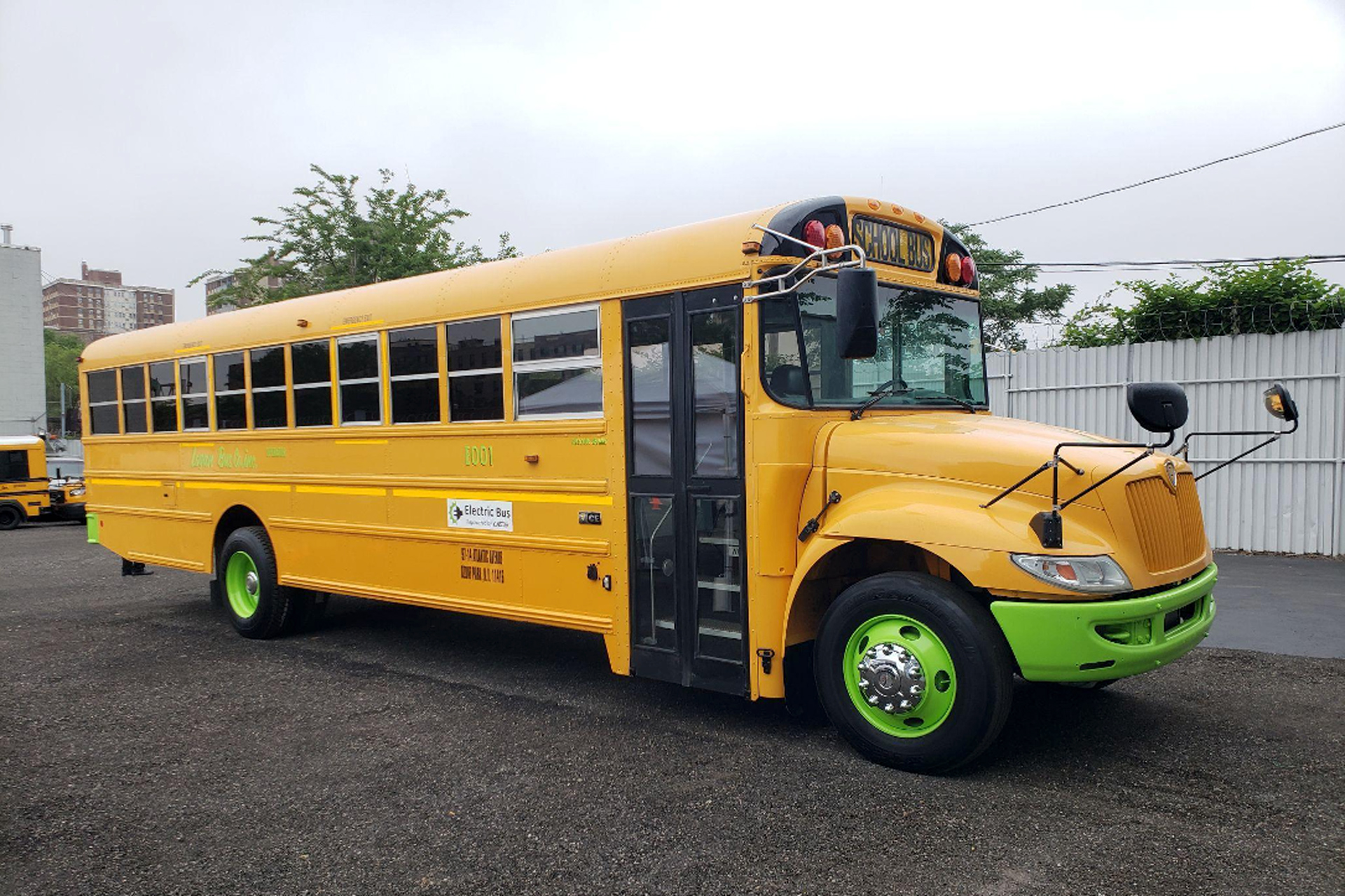
A diesel-to-electric repowered school bus in operation for Logan Bus in New York City.
Photo courtesy of Unique Electric Solutions (UES).a
New York City has committed to going all-electric with its school buses by 2035. The
first electric school buses are hitting the city’s streets now and they are pioneering
a new model for transitioning their fleet. Instead of buying buses, Logan Bus Company,
one of dozens of contractors that provides transportation services for the city, is
instead converting five older diesel buses to electric.
The technical term for this conversion is a repower. Repowers involve converting an
existing diesel bus by removing the internal combustion engine components and replacing
them with an electric drivetrain, motor and batteries. In New York City’s case, a
company called Unique Electric Solutions (UES) is doing the repower. To our knowledge,
UES is the first company to repower a school bus since early efforts by Blue Bird
in the 1990s with the ancient, lead-acid technology of 30 years ago. The first diesel
to electric school bus repower of modern times occurred in 2017, when UES repowered
two buses for contractor Suffolk Transportation Services. Four years later, those
buses are still on the road.
These repowered school buses in New York also might be the first of an oncoming tidal
wave of repowered diesel to electric buses. For example, SEA Electric and Midwest
Transit Equipment announced last month an effort to repower 10,000 buses over the
next five years. If these companies succeed in converting all of these buses from
diesel to electric, it would increase the number of electric school buses on the road
today by a factor of 10.
How Do Repowers Work?
UES Vice President Mike Backman walked me through his company’s repower process. Before
a repower can occur, a route and needs assessment must be conducted. All school bus
manufacturers work with districts to see how far the route is and what its terrain
is like. If a district’s route is relatively short and flat, this initial assessment
will size a battery accordingly and save a school district money since batteries are
the most expensive part of a vehicle. For repowers, the batteries typically come in
modular sizes of 50 kWh, meaning a school district can add more battery packs to a
repowered bus to increase range. Ranges typically vary from 70 to 100 miles.
Repowers also include a bus assessment. “Buses are all different,” Backman explained.
“Some are better suited than others for repowers.” Though he added there is a sweet
spot in age and condition for school bus repowers. Brand new buses and vehicles can
be depowered, but at that point it almost feels like you might as well have built
the bus to be electric to begin with.
Still, companies are doing it. Lightning eMotors, for example, takes brand new Ford
Transits and converts them to electric transit vans. On the other hand, if a vehicle
is too old or worn down, it runs the risk of putting sparkling new electric components
into a shell that is near retirement. The sweet spot age for repowers runs from three
to twelve years old (depending upon weather and geography).
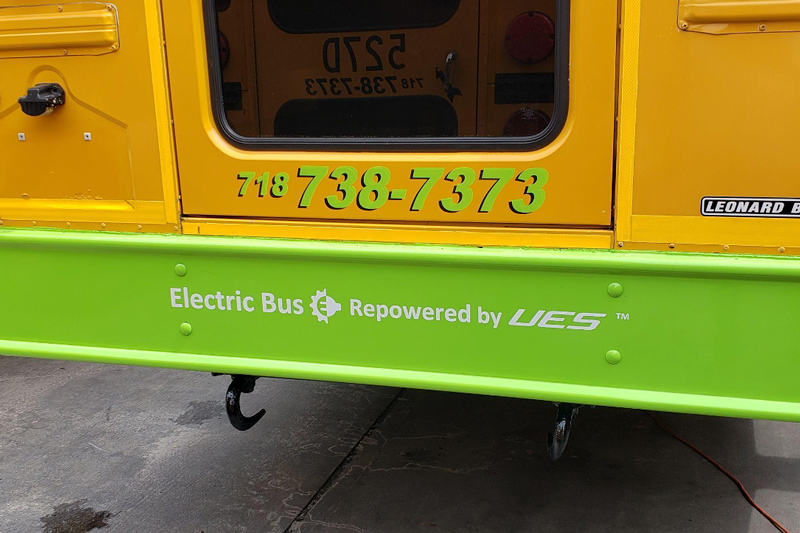
Photo courtesy of UES.
After the vehicle assessment comes the conversion process, and this is where the repower
shifts into full gear (poor pun intended as ESBs often don’t have transmissions).
“All of the dirty stuff gets taken out including the engine, the diesel fuel tanks
and fuel lines, the turbo charger, transmission, the tailpipe, muffler, etc,” Backman
said. “Basically, all of those will come out and in their place we’ll put a single
clean electric motor with only a handful of moving parts along with electronics, cabling,
batteries and a driver dashboard.”
Once diesel bus becomes electric, the final step is quality control and a safety check.
These buses carry precious cargo and this task is of course crucial. After that, the
bus is ready to go into action.
Potential Upsides to Repowers
Speed of conversion: Repowers take only a matter of weeks, which is substantially
less than getting into line for a new electric bus. Although current parts shortages
plaguing the automotive industry are also affecting repowers.
Cost: The cost of repowers is extremely compelling and targets the biggest barrier
to adoption of electric school buses. Repowering buses from diesel to electric costs
less than half of most new electric school buses. A typical repower costs between
$125,000 and $175,000, depending on battery size, compared to a new electric school
bus, which typically runs between $350,000 and $400,000. Traditional diesel school
buses are usually in the $125,000 to $150,000 range.
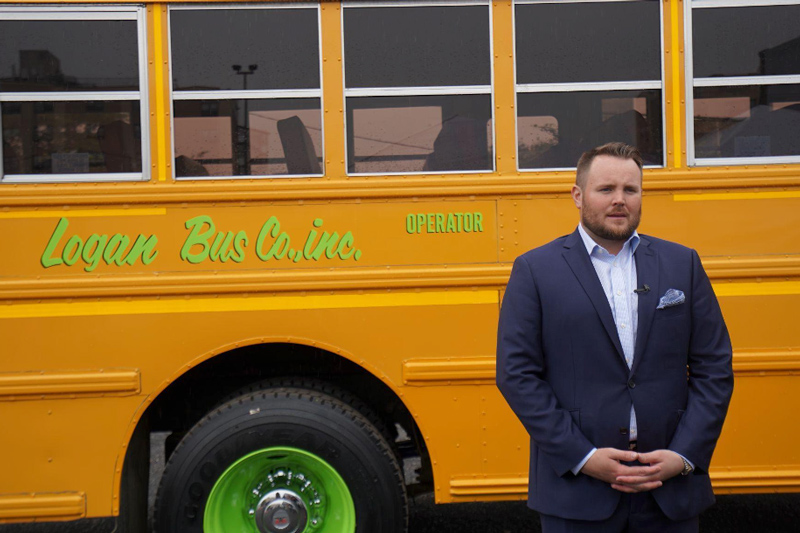
Corey Muirhead, the executive vice president for New York City contractor Logan Bus,
discusses the diesel-to-electric depowered school bus provided to the company by Unique
Electric Solutions. Photo courtesy of UES.
Repowers Make Some Districts and Private Operators Nervous
Some districts and private operators I’ve talked with are nervous about the idea of
repowers for liability reasons. They worry that substituting the original diesel components
of a bus increases the likelihood that something could mechanically go wrong while
buses are transporting our most vulnerable population – students.
Companies like UES respond that retrofits have been happening for years, they’ve just
been diesel, propane or CNG retrofits rather than electric ones. And they say that
diesel to electric repowers remove only the drivetrain components without touching
other existing systems. Repowers remove most mechanical parts that cause breakdowns,
like all-electric vehicles, and so there is the expectation that they will be subject
to less mechanical issues in general compared to diesel buses. And they reduce other
dangers like harmful diesel fumes.
Another concern with repowers is the longevity of the old chassis. If you’re converting
a 5- to 12-year-old diesel bus into an electric bus, it may not make sense to have
a new drivetrain that can outlast the old body and chassis.
Repowers are still on the bleeding edge of electric school bus technology, so we won’t
have extensive data on longevity of these vehicles for some time. But there are reasons
for optimism. Repowering a vehicle removes many maintenance-prone components. Companies
predict these electric drivetrains may last long enough to be reinstalled into yet
another repowered vehicles after the bus chassis/body itself expires.
First NYC Buses Benefiting from Managed Charging
AMPLY Power is part of a wave of charge management companies figuring out how to make
it easier for districts to electrify their fleets. These companies are pioneering
a model where they front the upfront costs of installing charging stations and protect
districts from the variability of electricity prices which can change dramatically
depending on what time of day you charge your bus.
When contracting with a charge management company, districts pay consistent costs
for electric fuel over the period of their contract that are cheaper than fossil fuels.
In New York City, AMPLY will cover the costs of installing chargers and Logan Bus
Company will pay by the kWh of electricity they use by the mile. This model is similar
to the Power Purchase Agreements in the solar industry that started a decade or so
ago where companies installed solar on customers’ roofs for free and then customers
paid them back through normal electricity costs over time.
In this NYC project, these first five electric buses will also provide power back
to the grid during peak times of electricity usage. Using electricity stored in the
buses has great potential to help local utilities reduce their reliance on fossil
fuel power plants which ramp up during times of heavy demand. A Thomas Built Bus was
able to provide 3 megawatts back to the grid in a pilot in Massachusetts this past
summer proving the vast potential for school buses to provide this service. Vehicle
to Grid charging with Electric school buses is still in its infancy and it’s exciting
that AMPLY will share the data they collect from the project so we can all learn more.
The first electric buses to hit New York City’s streets will benefit from significant
innovation. They’ll be converted from running on dirty diesel to clean electrons.
They’ll cost less than half the price of a new electric school bus and they’ll benefit
from managed charging where the school district won’t have to pay high upfront charger
installation costs and won’t have to worry about uncertain, variable electricity rates.
They’ll also help power the grid during times of peak demand. The team on this project
is attempting to solve some of the major barriers to school bus electrification and
if they’re successful could speed up electric school bus adoption everywhere.
Joseph Wachunas is the development and program manager for Forth Mobility, a firm
that specializes in accelerating the use of smart and shared transportation through
industry networking, project demonstrations, and advancing policy.