
ChatGPT for Developing Interactional Competence: Affordances and Constraints
MIC Distinguished Lecture Series
Date: Thursday, April 2, 2026
Time: 4:00-5:15 PM
Location: HUM 1006
Abstract: The advent of ChatGPT has redrawn the boundary of pedagogical discourse, where the dyadic configuration of teacher-student has, for many, become triadic — one that includes AI as an relevant third party, not to be missed or dismissed. Within applied linguistics, AI-focused research has predominantly targeted the teaching and learning of writing (Fang & Han, 2025). The work on AI and speaking, on the other hand, has largely involved perception studies documenting its positive impact on learners’ willingness to communicate (Goh & Aryadoust, 2025). In this talk, I explore the role of AI in the teaching and learning of speaking, and in particular, the development of interactional competence. Based on a corpus of learner-AI interactions, I demonstrate the ways in which ChatGPT excels and fails at acting as a useful conversation partner, with a view towards furthering our ongoing deliberation on the affordances and constraints of AI in language education.
If you need special accommodation, please contact chikako.nakamura@stonybrook.edu
Speaker:
Hansun Zhang Waring (Teachers College, Columbia University)
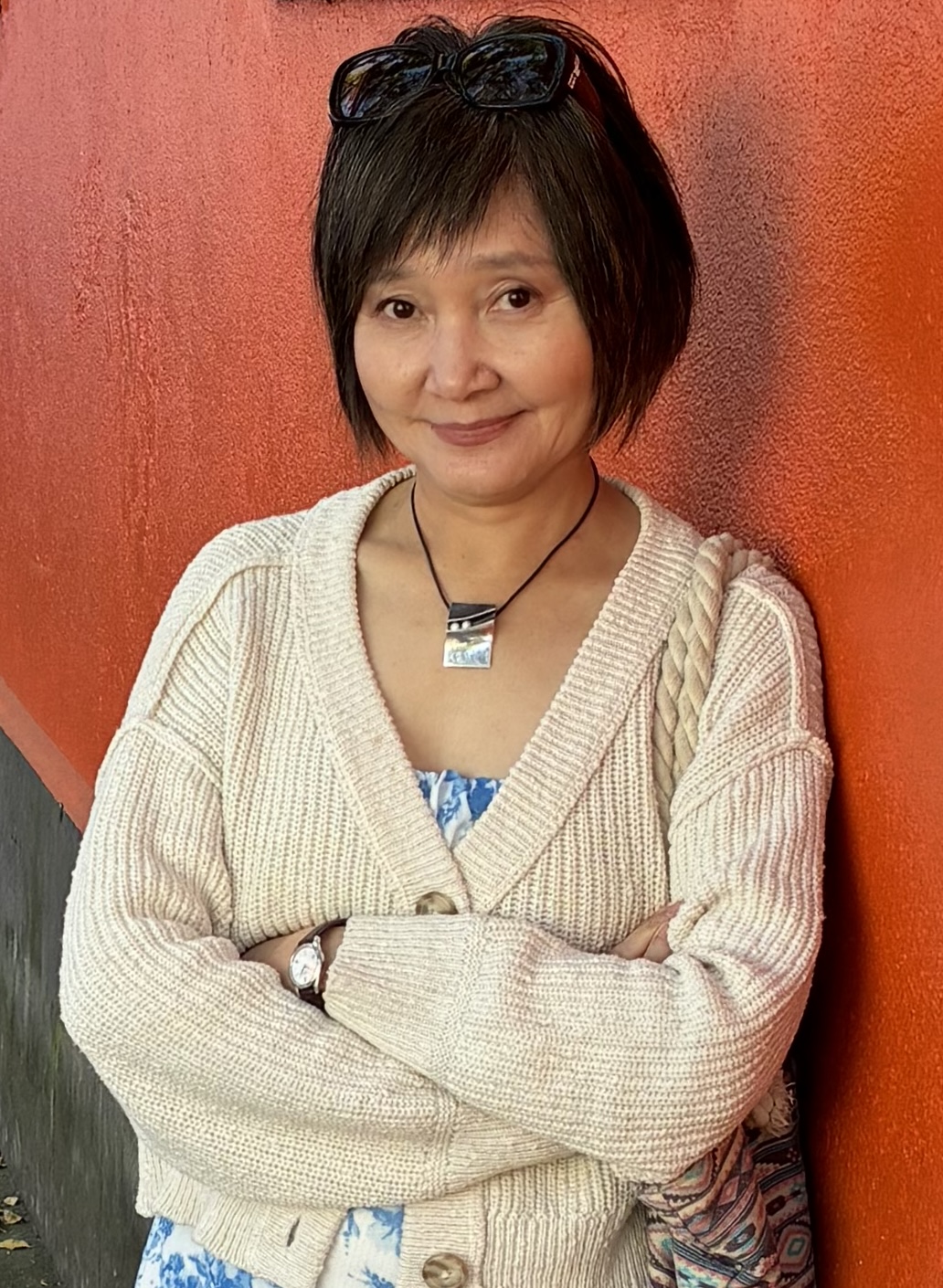
Hansun Zhang Waring is Professor of Linguistics and Education at Columbia University and founder The Language and Social Interaction Working Group (LANSI). As an applied linguist and a conversation analyst, Hansun is interested in all things interaction — (second language) pedagogical interaction, communication with the public, parent-child interaction, and human-AI interaction (HAI). Her work has appeared in leading journals in applied linguistics and discourse analysis as well as numerous book volumes, some of which she (co-)authored or co-edited. She is on the editorial boards of Chinese Language and Discourse (CLD), Classroom Discourse (CD), and International Review of Applied Linguistics (IRAL).