
Faculty and Visiting Faculty
Susan minot
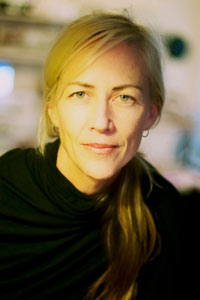
Visiting Assistant Professor, Creative Writing
Susan Minot studied writing and painting at Brown University and received an MFA in
writing from Columbia University. After she published short stories in Grand Street and The New Yorker, the legendary publisher Seymour Lawrence brought out her next three books: Monkeys, a collection of linked short stories which won the Prix Femina Etranger in France
in l987; Lust & Other Stories, another collection, and Folly, a novel. She collaborated with the director Bernardo Bertolucci on the screenplay
of Stealing Beauty. Her fourth book, Evening, was made into a major motion picture in 2007. It was followed by the novels Rapture in 2002,Thirty Girls in 2014, and Don't Be a Stranger in 2024.
FACULTY INTERVIEW:
What genre(s) do you write in?
I would say literary fiction or realism, but I also write poetry. I also write non-fiction. I write movies and plays. So, the answer is no particular genre.
What is the thing that excites you about the act of writing?
Not just one thing. I would not write if there was not a constant level of electricity in the process. Words on a page. Even the ink on paper. Initially, I wrote to figure out what I thought about things. Writing was a way of not only forming my thoughts, but giving expression to feelings. The ability of words to describe pretty much anything-- a view, a person-- to record a conversation, to imagine a scenario, to express ambiguity and confusion and rapture and beauty, to puzzle something out, and to sort through what in life wants to be paid attention to, such as the movements of the heart longing for expression, the perplexities of the soul. I can’t measure what writing does for me, but I can't imagine not having it there as a way to communicate to another person, as well as to myself.
Do you feel like your work is in conversation with other writers or work? If so, who/what?
I think my work is a desperate attempt to describe from the small spot where I stand what it is like to be alive as a human being. A writer creates a separate world on the page, to present to a reader. It is not a conversation.
That said, half of writing, the basis of writing, is reading what other writers have to say. So it is like a kind of parallel play. You're each doing something on your own, but it's absolutely crucial as a writer to see what other writers have done.
What literary magazine would you recommend to your students?
On the wider higher end: The New Yorker, Harper's, and The Atlantic. On the other end of less big, but probably more serious: The Paris Review, The Sewanee Review, The Kenyon Review, Tin House, Zoetrope. Of course, The Southampton Review.
I always recommend that my students go into a good bookstore where there's a big wall of journals and get to know the journals. Not only is some of the best work being published there, but you will also learn which journals are most in line with the work you are doing. That's part of your job as a writer, figuring out where your work belongs.
What is your writing process?
Over fifty five years, I’ve had many different habits of writing. When younger I wrote compulsively every chance I had, filling notebooks, writing letters, reading books (the other half of writing). Depending on what other things I was doing in life, the writing hours changed. One continual thing: you must make yourself sit down and not get up. Or if you stand up writing, do not go wandering off. You will lose the momentum. Delacroix talks about having to break through the crust of the every day when he’s go each morning into his studio to paint. Now, I also find it most productive when I sequester myself from people if possible for large chunks of time.
How do you generate ideas?
I never try to generate ideas. They come randomly. I notice that I am hit with notions for writing after experiencing art: at a painting show, or museum visit, after a film or play, while reading, but those come also while sweeping the kitchen, hearing a song, while walking at the end of the day, waking in the middle of the night. One learns to pay attention to those moments, to a thing which seems worth exploring, and hopefully to noting it down because it will pretty likely otherwise slip away.
How do you manage when you get stuck?
Different ways. Sometimes you leave what you’re working on. For a while. Or forever. You work on something else. Or you take a walk, read a book, go to a movie.
But better is when you whimperingly make yourself power through and stick with the frustration till you find a different place to be (this usually happens with the magic wand of the deadline.) I also know that one always gets stuck in the process of writing something and it isn’t an indication that one should abandon ship. (Though it also might be.) So many things about writing are true in one light, and not in another.
Inspiration or perspiration?
As Faulkner said, What is inspiration? I’ve never seen it.
Or as Red Smith had it, Writing is easy…you just open a vein and bleed.
If you weren't a writer, what job would you have?
I’d love to make a living as a painter.
Do you have a writing tip for emerging writers?
Keep at it. Endurance is the most important quality of a writer. That’s really the only advice there is: Write. You will learn about writing only by doing it.