
Arts Everywhere:
Showcasing Transformation from Chemistry to Art
The Arts Everywhere: Showcasing Transformation from Chemistry to Art exhibition,
part of the CAS Arts Everywhere Initiative, invites student artists to reflect on chemistry, not just as a science, but as a
metaphor for change, connection, and material transformation.
Curated by art history majors Rebecca Zhang and Ynuel Spencer
- Rebecca Zhang '27
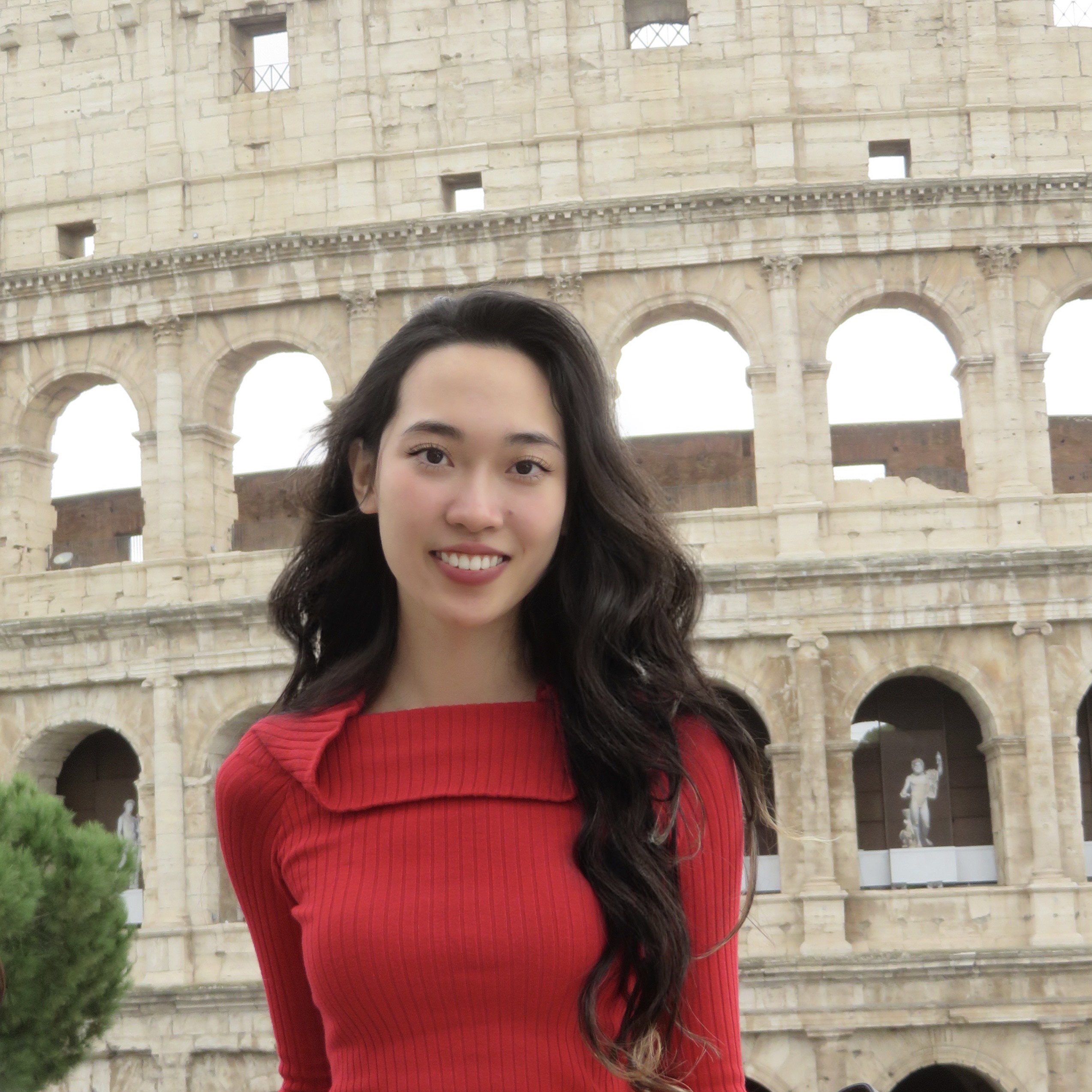 Art History major
 - Ynuel Spencer '27
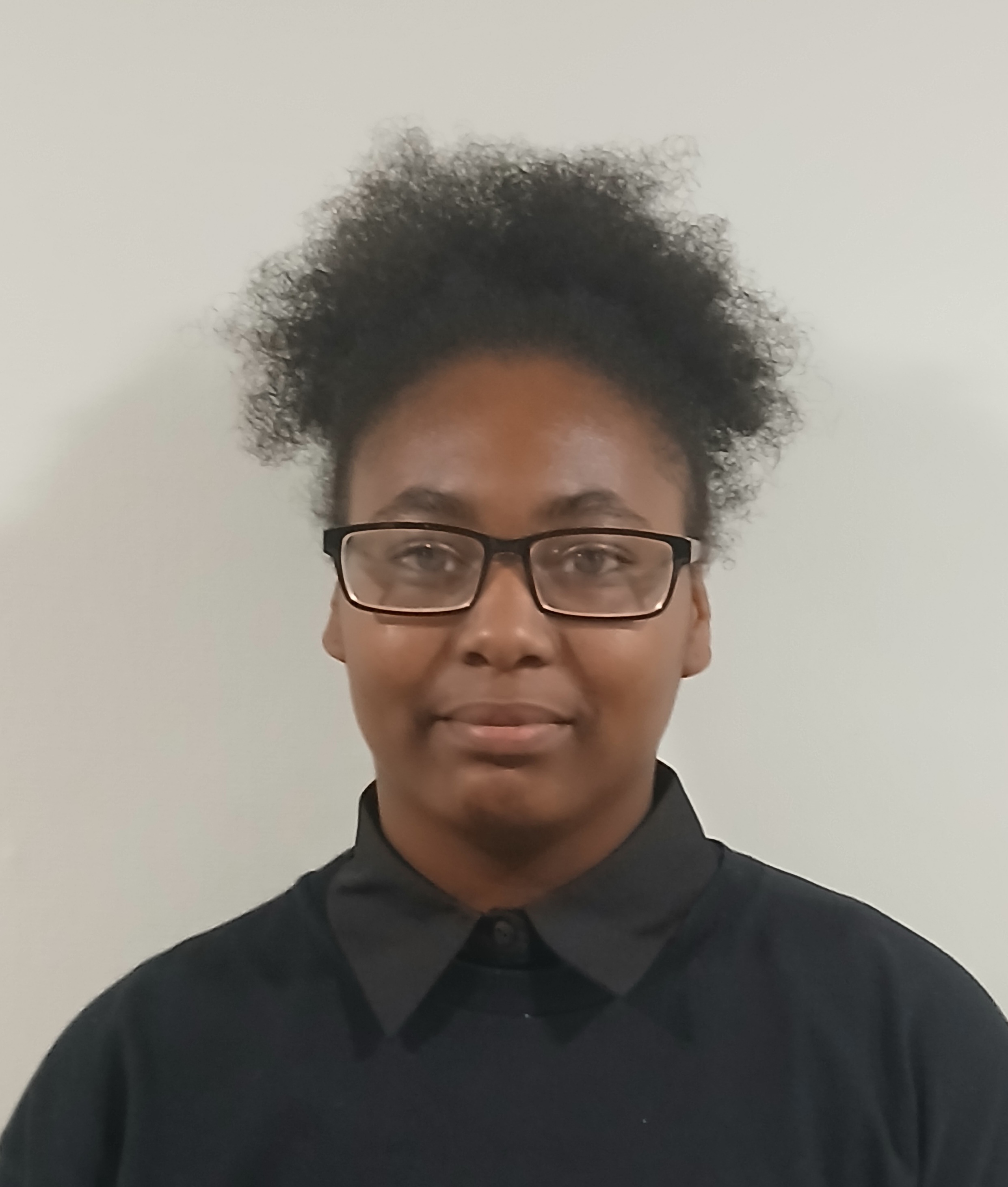 Art History major
Chemistry is the foundation of all matter and transforms simple elements into complex structures. At its core, chemistry is the study of how particles interact, combine, and change. Every material is shaped by chemical reactions and determines color, texture, and form. Chemistry becomes both the literal and metaphorical process allowing elements to merge, break apart, and recombine to create something new. Similarly, art transforms materials, emotions, and ideas into forms that speak to the intricate nature of the human experience.
Transformation from Chemistry to Art showcases four artists who trace this shared language of transformation—how science
underpins creativity, and how creativity gives meaning to science.
Featuring the works of student artists:
Kyla Nicole Hutter' 26, Studio Art
Serendipity, 2024
Wood Sculpture
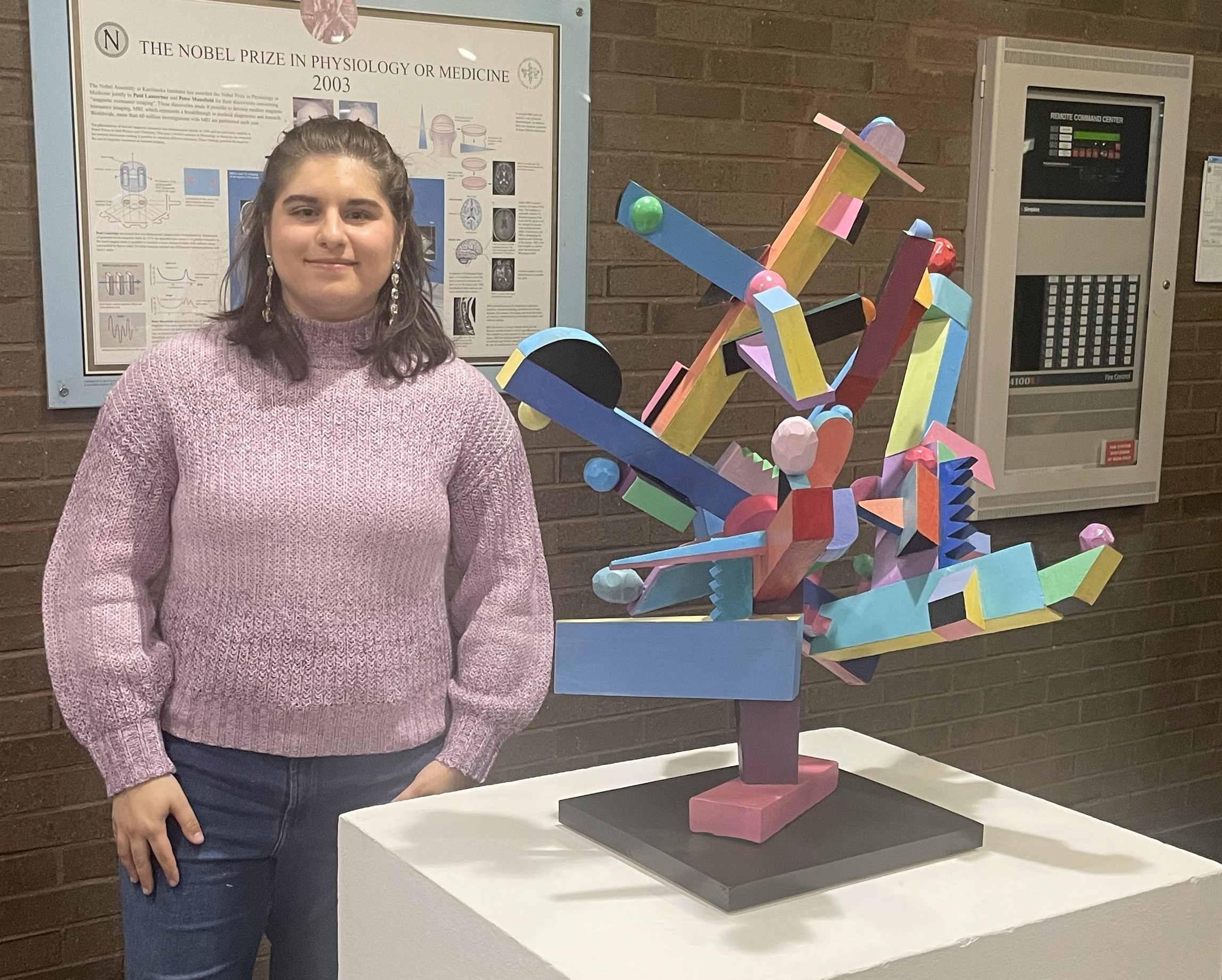
Serendipity is a wood sculpture that explores the expression of form, color, and texture. Its structure fights against gravity and its shape exemplifies the chemical bonds. Using chance, change, and transformation, Hutter likens the creation of the sculpture to a chemistry experiment. While the structure intentionally appears to look unstable, it is structured by the geometric shapes and forms of chemical models. Hutter explains: “When glancing at the sculpture from multiple angles it is ever changing like the constant evolving discipline of Chemistry.”
Christie Jones '27, Studio Art
The Corals, 2025
Plaster Sculpture
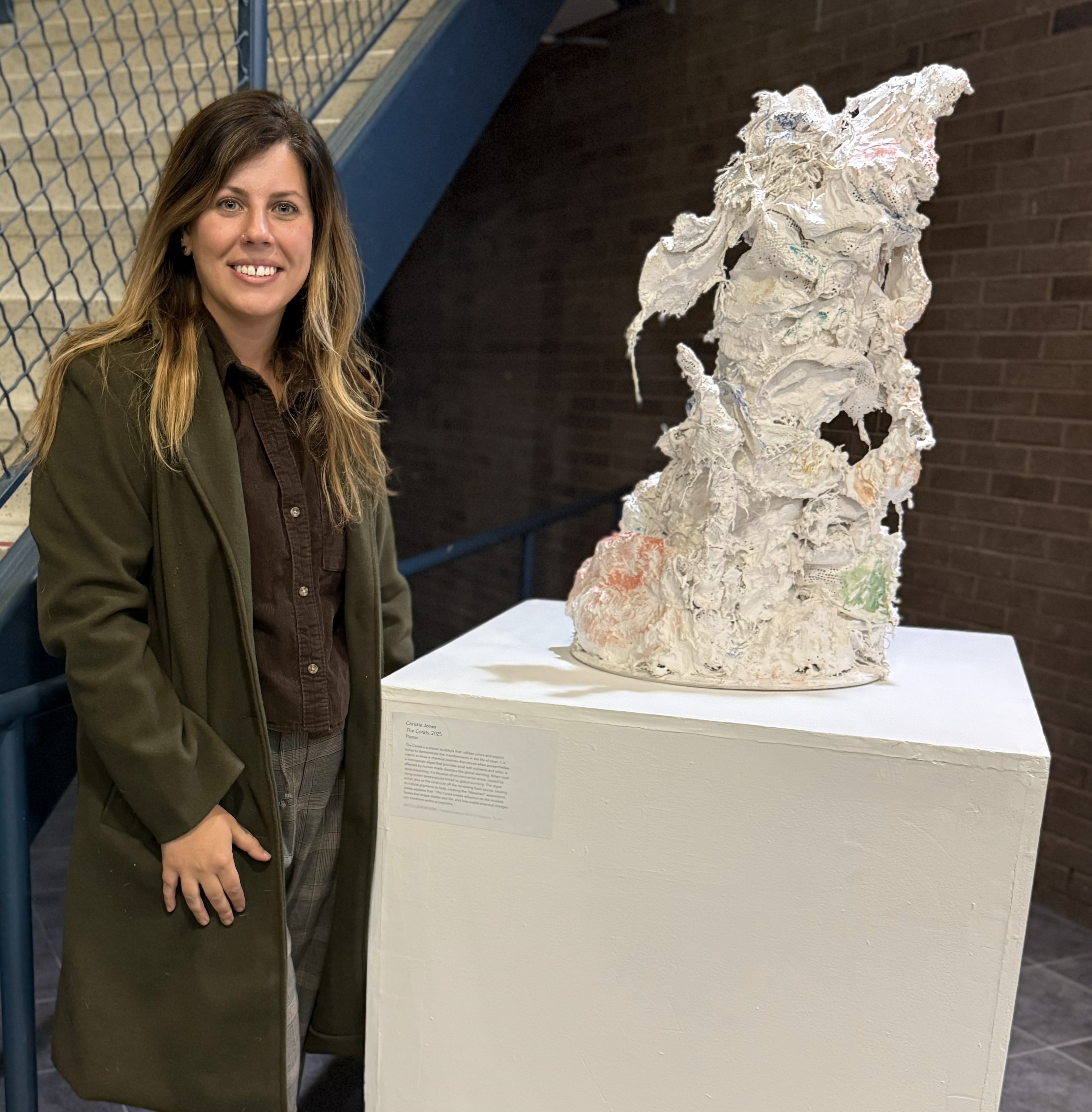
The Corals is a plaster sculpture that utilizes colors and organic forms to demonstrate the transformation in the life of coral. It is meant to show a chemical reaction that occurs when zooxanthellae, a microscopic algae that provides coral with nutrients and colors, is affected by human made disasters like global warming. When coral starts bleaching, it’s because of environmental stress, caused by rising ocean temperatures linked to global warming. The algae either dies or the coral cuts off the remaining food source, causing its natural pigments to fade, creating the “bleached” appearance. Jones explains that “The Corals invited reflection on the invisible forces that shape matter and life, and how subtle chemical changes can transform entire ecosystems.”
Eleni Tsevis '26, Studio Art
Jungle, 2025
Ceramic Tile with alcohol ink
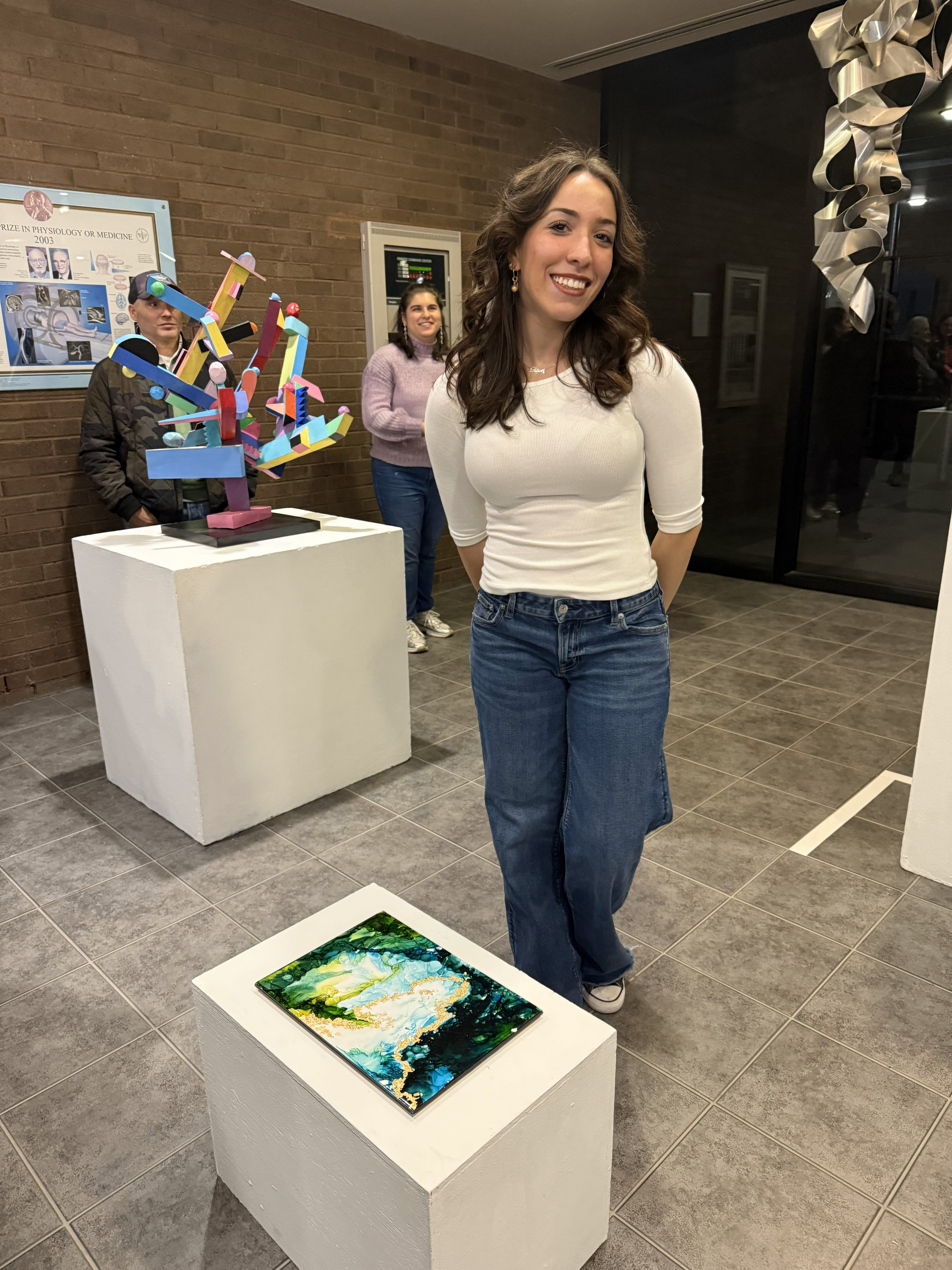
Jungle is an abstract landscape created by alcohol ink on ceramic tile. The work shows the process of creation by making movement and reaction visible through the interaction of different pigments. Tsevis works in layers to make these reactions visible. Each layer brings new colors to the surface, and unites the piece as a cohesive whole. Chance, reaction, and experimentation are all integral components in Tsevi’s process and we are invited to witness the outcome.
Ingerlese Pedersen '27
Health Science major
Cellular Mosaic, 2024
Ceramic Sculpture
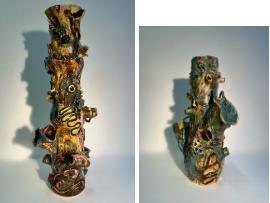
Cellular Mosaic consists of two ceramic vessels which represent microscopic life and physical matter. Utilizing the transformation of clay, Pederson wanted to display “what that microscopic life looked like in a tangible way.” The vibrant textures and colors allow viewers to imagine the presence of molecules under the surface, making the unknown known. The organic shapes and forms help push the narrative that there is a “never-ending movement of energy” in all things made of matter.