
Faculty and Visiting Faculty
Stephen aubrey
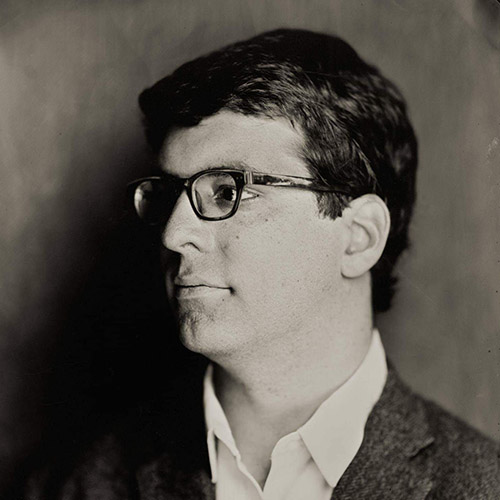
Lecturer, Creative Writing
Stephen Aubrey is a Brooklyn-based writer and dramaturg. He is a founding co-artistic
director of The Assembly, and his plays have been produced at The New Ohio Theater,
The Living Theater, The Ontological-Hysteric Theater, The Collapsable Hole, and Edinburgh
Fringe Festival, where his original play, We Can’t Reach You, Hartford, was nominated
for the prestigious Fringe First Award. His fiction and essays have appeared in Electric
Literature, CRAFT, Publishing Genius, and The Brooklyn Review. He is currently an
editor and game designer at Stillfleet Studios. MFA: Brooklyn College. www.stephenaubrey.com
FACULTY INTERVIEW:
What genre(s) do you write in?
I'm a playwright and a fiction writer, mostly short stories.
What is the thing that excites you about the act of writing?
Playwriting and fiction writing are so different. It's a different thing for both.
What I like about playwriting is it is a highly collaborative way of working. A script is really just a blueprint for production. I'm creating something with the anticipation of having a lot of other smart people come in and add elements to it that I couldn't have imagined or that I wasn't aware were there. I have a theater company, and so I have a small group of actors who I'm frequently working with. I know, when writing, that it's going to be bigger than what’s on the page, and that's really exciting to me.
But, at the same time, collaboration is hard. And so what I like most about writing fiction is the opportunity to not have to collaborate anymore. The opportunity to make all of the decisions, to create small microscopic worlds that all come from my mind is also exciting.
Do you feel like your work is in conversation with other writers or work? If so,
who/what?
As a playwright, you're always in conversation. I create many of my plays through a process called devising, which is essentially just a long, constant conversation with other artists: my actors, my designers, my director. I got interested in devising as a method of theatrical creation when I was first out of college. I was seeing a lot of theater created through similar processes by companies like the TEAM, Elevator Repair Service, The Debate Society, Pig Iron. Seeing what they were doing and the unique quality of that work made me want to do work like that as well.
In my fiction writing, I'm attracted to writing that expands what I think is possible of a short story. Italo Calvino, Julio Cortazar, Mark Danielewski. I am interested in that formal playfulness and experimentation in point of view, structure, and style.
What literary magazine would you recommend to your students?
I love Electric Literature. I'm a little biased because I was a reader for them way back when it started. I find getting a thick literary journal quarterly can be intimidating, but Electric Literature has something called Recommended Reading, which is just one short story a week sent to your email. It’s like a greatest hits of the literary world. I find it much more manageable.
What is your writing process?
I used to have a more rigorous writing process where I was writing at the same time every day, but as a new parent, I now write for five or ten minutes whenever I can get it. I think sometimes about how Raymond Carver would steal time to write by sitting in his car and would write a story on a pad on his knee. I have what I call my little writing totem. It’s a little toy, right now it’s a plastic sloth. I carry these totems with me and whenever I bring it out, whether I’m at the kitchen table, at my desk, on the train, the totem means I’m going to focus on my writing. Now, I think that's done interesting things to the kind of writing I'm doing. I'm tiptoeing back into poetry more and investigating short form work.
How do you generate ideas?
I read widely and in very niche areas, which is where I get a lot of my inspiration from. Sometimes I get ideas from reading a history book or a philosophy book. A lot of my writing tends to be centered around something that I found interesting, whether it's a weird scientific theory or something that happened in the 14th century. That idea is then transmuted into a different form, combining with other obsessions and things I want to say about my life.
How do you manage when you get stuck?
I first try to write through it and let myself be terrible. Other times, I find taking a walk or a shower activates a different part of my brain. I've solved many, many narrative problems in the middle of Prospect Park.
Because I'm doing theater and fiction at the same time, I'm always juggling a couple of different projects. If I’m really stuck, then I work on another project. When I come back to the original one, I usually see something that I didn't see originally.
Inspiration or perspiration?
Writing is like a muscle, you have to exercise it as often as you can. You go to the gym on days when you don't feel up to going to the gym, so you have to write on days you don't feel like writing. It's got to be perspiration. If you wait for inspiration, you're not going to be ready when it comes.
If you weren't a writer, what job would you have?
I studied medieval history and dead languages in college. If I weren't a writer, I probably would be some sort of historian or archivist. I’ve always wanted to unearth stories.
Do you have a writing tip for emerging writers?
It's important to change the way you think about failure and about disappointment. Your first drafts are never going to be as good as you want them to be. Revision is a constant act of failure and the failure hopefully just gets smaller and smaller over time until it is a small kernel that no one but you can see. You're going to have to apply and submit to a lot of places. And people are going to say no. If you become paralyzed by the idea of not being a good writer, or get discouraged each time people say no, it's going to inflict psychic damage on you. I think you have to learn to see what possibilities there are in failing, and be interested in where rejection can take your work.